
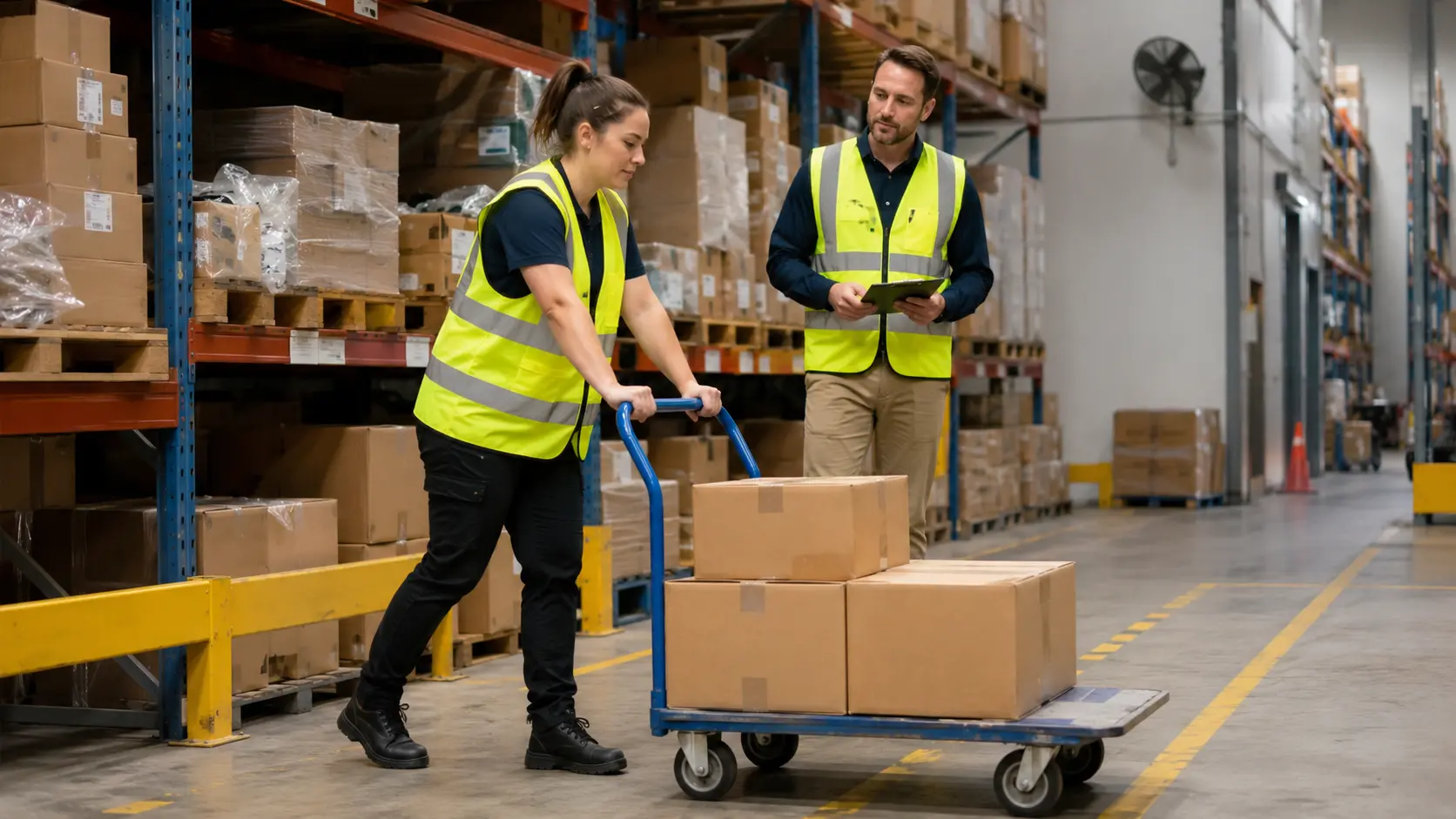
Why Generic Manual Handling Training Wasn’t Enough
Generic manual handling training may tick a box in the LMS, yet it rarely proves a specific workplace risk has been controlled. A recent Queensland court decision shows exactly where that gap opens up.
According to a recent report, Alliance Airlines had provided manual handling training and conducted annual on-board checks. Even so, a Queensland court ordered the airline to pay $602,068.02 after a former flight attendant and cabin manager injured her back while pulling a catering cart from a galley stowage bay.
The issue was not that training was absent. Rather, the training was reportedly generic, while the task that caused the injury was specific, routine and performed in a confined environment. That distinction matters for HR, WHS, compliance and L&D leaders.
A training record may show that a worker completed a module. However, it does not prove that the training reflected the actual task, that managers were observing safety-critical behaviour, or that unsafe habits were being corrected over time. Consequently, this case is a timely reminder that compliance training must connect to real workplace behaviour.
- What this blog covers
- Why generic manual handling training may not be enough where a specific workplace task carries a foreseeable injury risk.
- Who it’s for
- HR leaders, WHS managers, compliance teams, L&D managers, business owners, officers and frontline managers.
- Key regulatory context
- Under the WHS Act 2011, PCBUs must manage health and safety risks so far as is reasonably practicable. Hazardous manual tasks demand active risk management, not passive awareness.
- The central risk
- Organisations may lean on generic annual eLearning while never checking whether workers can apply safe practices in their real environment.
- Primary action required
- Review whether training is customised to actual roles, tasks, equipment, policies, reporting pathways and manager responsibilities.
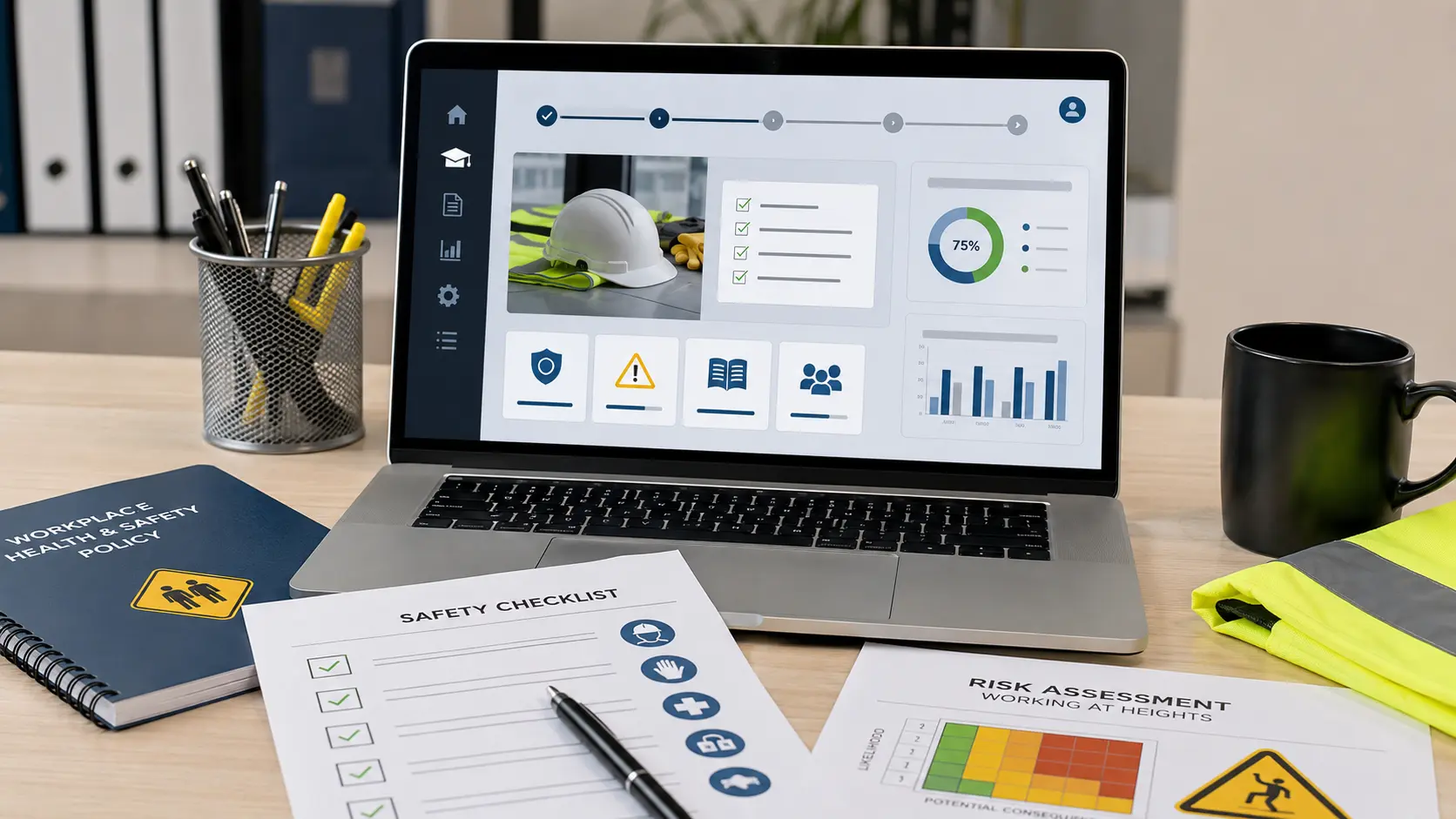
The compliance issue was not “no training”
Manual handling risk refers to the risk of injury from tasks involving lifting, lowering, pushing, pulling, carrying, holding or restraining. In practical terms, the danger is not always heavy lifting. Instead, it can arise from awkward posture, confined space, sudden force, repetition, poor equipment design or the way a task is organised.
According to the report, the worker was injured while pulling a catering cart from a galley stowage bay before takeoff. The task was routine. Specifically, crew were required to pull carts from storage to check inside and behind them before originating flights.
A confined space the training never addressed
Notably, the physical environment mattered. The report stated that the stowage bay was 88 centimetres wide, while a full cart was 81 centimetres long. That left little room to stand directly behind the cart, so crew tended to pull from the side in a twisted posture.
This is why generic manual handling awareness can fall short. A broad module about safe lifting may not teach a worker how to safely perform a confined, awkward, task-specific movement in an aircraft galley — or any other real workplace. Crucially, the court reportedly found that the employer had provided task-specific advice for some cart-related work, such as serving passengers, but not for safely pulling carts from stowage.
The problem was not eLearning itself. The problem was eLearning that did not reflect the actual risk.
Customised eLearning connects training to real work
Customised eLearning means compliance training that reflects the organisation’s actual policies, roles, equipment, procedures, risk profile and behaviour expectations. That matters because workers do not perform tasks in generic environments. Rather, they work in aircraft galleys, warehouses, hospitals, retail stockrooms, construction sites, laboratories, offices, vehicles and client-facing spaces — and each one creates different risks.
What good customised training actually does
For manual handling, customised training should do more than explain general principles. Instead, it should help workers understand what safe behaviour looks like in their role. In practice, that includes the specific manual tasks they perform, the equipment they use, the spaces they work in, the warning signs they should recognise, and the steps they should take when something feels unsafe.
It should also explain what managers are expected to observe and correct. Importantly, safe systems of work rely on leadership capability, not just worker knowledge. If supervisors do not know what safe performance looks like, they cannot reinforce it consistently.
Furthermore, customised eLearning supports psychological safety and reporting culture. Workers are more likely to report discomfort, awkward tasks or near misses when training clearly frames these as valid safety signals rather than complaints. Under the WHS Act 2011 and guidance from regulators such as Safe Work Australia and SafeWork NSW, training should sit within a broader compliance framework — hazard identification, consultation, risk management, supervision, early intervention, documentation and review.
Annual training is not enough if habits drift
A safe system of work is not created once and then left alone. It must be maintained. According to the report, the court found that an employer’s duty to provide a safe system of work does not stop at induction. Over time, training fades and habits drift, especially when tasks are routine, time-sensitive or physically awkward.
Therefore, a worker may complete annual training and still develop unsafe habits. Similarly, a manager may run annual checks and still miss the risk if the check focuses on service quality or task completion rather than how the task is physically performed.
When you only measure performance, safety slips
The report noted that the employer’s annual on-board checks observed crew for service performance, not whether they were lifting and pulling safely. That distinction matters. Indeed, if an organisation only measures operational performance, workers learn that operational performance is what matters most.
Consequently, ongoing reminders and reinforcement become essential. Refresher training, toolbox discussions, manager observations, scenario-based microlearning and task-specific reminders can all help prevent training decay. For eCompliance Central, this is the core argument for customised compliance training: it should support behaviour change, not simply exist in the LMS.
The invisible risk: generic training creates false comfort
The invisible risk is false comfort. It occurs when an organisation believes a risk has been controlled because a module has been completed. The LMS record looks clean, the policy exists, and the annual refresher has been assigned — yet the actual behaviour may not have changed. As a result, a compliance gap opens up quietly.
Generic training may tell workers to avoid twisting, use safe posture or ask for help. However, if the real task takes place in a confined space, involves awkward force, or requires workers to respond when equipment jams, the training needs to address those realities. Otherwise, the organisation holds evidence of training completion without evidence of effective risk control.
False comfort also shapes culture. Moreover, if workers believe awkward tasks are simply “part of the job”, they may stop reporting discomfort or near misses. The consequence chain is clear:
- Generic training creates false comfort, and false comfort reduces scrutiny.
- Reduced scrutiny allows unsafe habits to continue and become normalised.
- Normalised habits raise injury risk, which drives WHS, workers compensation and governance exposure.
What organisations should review now
The practical takeaway is straightforward. Ultimately, organisations should review whether their compliance training reflects the work people actually do. For manual handling and other WHS topics, leaders should ask:
- Does our training reflect the actual tasks workers perform, with role-specific examples, equipment and conditions?
- Does it explain what workers should do when a task feels unsafe, and how to report it?
- Are managers trained to observe and correct unsafe behaviour, rather than only checking output?
- Do our annual checks assess safety-critical behaviour, or only performance?
- Are reminders and refreshers provided before habits drift?
- Do we document coaching, corrective action and control changes when tasks or equipment change?
These questions matter because completion records alone are not a safe system of work. In particular, a strong framework connects the worker’s role, the manager’s responsibility, the code of conduct, the reporting pathway and the evidence of follow-up action.
The eCompliance Central Customised Training Check
A practical way to assess existing training is to apply one simple test: does it help people do the real task safely? Accordingly, run each module through these five questions.
Specific to the role
Workers should immediately see how the content applies to the tasks they actually perform each shift.
Specific to the risk
Each module must address the real hazard, rather than only naming the broad compliance category.
Specific to the workplace
Examples should mirror your environment, equipment, policies and procedures — not a generic stock scenario.
Reinforced by managers
Supervisors need to know which behaviours to observe, correct and escalate once training ends.
Supported by evidence
Records should capture reminders, observations, reporting, coaching and review — not merely completion.
Reading the results of your check
If the answer to these questions is no, the organisation likely has awareness training rather than behaviour-based compliance training. By contrast, a module that clears all five gives managers and workers a shared, practical understanding of what safe behaviour looks like in context.
Compliance intelligence: key insights
Key takeaways
- Treat generic annual training as a starting point, never as your only manual handling control.
- Customise compliance training to the actual tasks, equipment and risks in your workplace.
- Train managers to observe, coach and correct unsafe behaviour in real conditions.
- Build reminders and refreshers into ongoing risk management, before habits drift.
- Use reporting, documentation and review to show that training is working in practice.
- Connect eLearning to WHS obligations, leadership capability and organisational culture.
Frequently asked questions
Why customisation matters
Why is generic manual handling training risky?+
Generic training can be a useful foundation, but it may not address the specific tasks workers perform. Where the real risk comes from confined spaces, awkward posture, equipment issues or time pressure, workers need guidance that reflects those conditions. Otherwise, generic content creates false comfort by recording completion without changing behaviour. That gap is exactly what regulators and courts look for.
Why is customised eLearning better for compliance training?+
Customised eLearning is more effective because it reflects your own policies, roles, risks and workplace examples. As a result, workers understand what compliance looks like in their actual job rather than in an abstract scenario. It also helps managers reinforce the right behaviours after training ends. In short, it turns awareness into practical, role-specific action.
What does good compliance training look like?+
Good compliance training is practical, specific and reinforced. Typically, it reflects your real workplace, explains expected behaviour, links to policies and reporting pathways, and gives managers a clear role in follow-up. Crucially, it should help people act safely and appropriately, not simply pass a quiz.
Obligations, managers and small business
Is annual refresher training enough on its own?+
Annual refresher training may help, but it should not be the whole system. Instead, training needs reinforcement through reminders, supervision, observation, reporting and corrective action. Where hazardous tasks are routine, organisations should monitor whether safe practices are actually being followed in real conditions.
What should managers do after manual handling training is completed?+
Managers should observe how workers perform manual tasks, correct unsafe habits and escalate recurring issues. Additionally, they should encourage workers to report discomfort, awkward movements, jammed equipment or near misses. In this way, training becomes an active compliance control rather than a completed LMS record.
Do small businesses need customised compliance training?+
Small businesses still hold WHS obligations to manage risks so far as is reasonably practicable as a PCBU. Customisation does not need to be complex or expensive; rather, training should reflect the actual work being done. Even simple role-specific examples, reporting steps and manager reminders can make training far more practical and effective.
Make your training reflect the real job
If your compliance training still feels like a box-ticking exercise, it probably is. eCompliance Central builds customised, SCORM-ready modules that reflect your real workplace — your policies, your people and your operational risks.
Explore Custom Compliance SolutionsRead our definitive Australian Workplace Compliance Guide.