

Last updated on August 27, 2025
When a fire alarm sounds or an emergency unfolds, confusion is the enemy. Indeed, a clear, well-rehearsed emergency plan is the critical difference between chaos and a calm, coordinated emergency response. For Australian businesses, having robust emergency procedures is not just best practice—it’s a fundamental legal obligation under Work Health and Safety (WHS) legislation.
To ensure your workplace has strong emergency preparedness, every leader and employee must know the answers to these crucial questions:
- What must be in our emergency evacuation plan? Your emergency evacuation plan must include clearly marked evacuation routes, designated assembly areas, and procedures for assisting anyone with a disability. In addition, it must name appointed Fire Wardens and their duties. Finally, you must make it easily accessible and display it visually as evacuation diagrams.
- How often should my business run fire drills? According to Australian Standard AS 3745, businesses should conduct fire evacuation drills at least once every 12 months. However, high-risk environments, such as major hazard facilities, may require more frequent evacuation exercises.
- What are the different types of fire extinguishers? Australia classifies its six main types of portable fire extinguishers by the type of fire they extinguish: Class A (solids), Class B (flammable liquids), Class C (flammable gases), Class D (combustible metals), Class E (electrical), and Class F (cooking oils/fats).
This guide will expand on these answers, consequently providing a detailed framework for developing and implementing effective fire safety procedures in your workplace.
Part 1: Anatomy of an Effective Emergency Evacuation Plan 🗺️
An emergency plan is a living document, not a file you create once and forget. Under Australian WHS laws, you must develop it in consultation with your workers and tailor it to your specific workplace, addressing all potential fire hazards. Therefore, a compliant and effective plan must include several key components.
Essential Elements of Your Evacuation Plan:
- Clear Evacuation Diagrams: These are the visual core of your plan. You should place them in prominent locations, where they must show the ‘YOU ARE HERE’ point, the nearest fire escapes, the path to those exits, the location of fire safety equipment, and the designated outdoor assembly area.
- Designated Assembly Area(s): You need a primary (and ideally a secondary) safe assembly point away from the building. Importantly, you must clearly communicate this location to all staff.
- Procedures for Specific Emergencies: Furthermore, your plan should cover various scenarios beyond just a fire or smoke event, such as a medical emergency, bomb threats, or hazardous chemical spills.
- Roles and Responsibilities: The plan must clearly outline the roles of the Emergency Control Organisation (ECO). This includes appointing and training an Emergency Planning Committee (EPC) and specific Fire Wardens for different areas. You must explicitly define their duties during an evacuation.
- Procedures for Assisting Others: A critical component is a clear procedure for the safe evacuation of anyone who may require assistance. You can often detail this in a Personal Emergency Evacuation Plan (PEEP).
- Communication Protocols: The plan must specify the warning systems and communication channels you will use. For example, it should detail how you will account for all personnel at the assembly area and contact emergency services.
Part 2: Fire Drills – Practice Makes Permanent ⏱️
A fire drill is not just about ticking a compliance box; it’s about building a strong fire safety culture. In a real emergency, people will revert to what they have practiced. As a result, regular drills ensure that your team can evacuate quickly, calmly, and safely, improving your overall response time.
Why are regular drills so important?
- Identify Weaknesses: First, drills allow you to find flaws in your evacuation procedures. Perhaps an exit is blocked, or the fire alarm system isn’t audible everywhere. This allows you to fix issues before a real emergency.
- Build Confidence: In addition, regular practice reduces panic. When employees know what to do, they are more likely to act rationally and help others.
- Test Your Wardens: Drills also provide practical experience for your Emergency response team in leadership, communication, and decision-making under pressure.
- Meet Legal Requirements: Finally, as stated, Australian Standard AS 3745 sets the minimum frequency for drills at once every 12 months. Your WHS regulator, like SafeWork NSW, can issue penalties for non-compliance. Following each drill, your EPC should meet to discuss the results and update your fire log book.

Part 3: Choosing the Right Fire Extinguisher 🔥
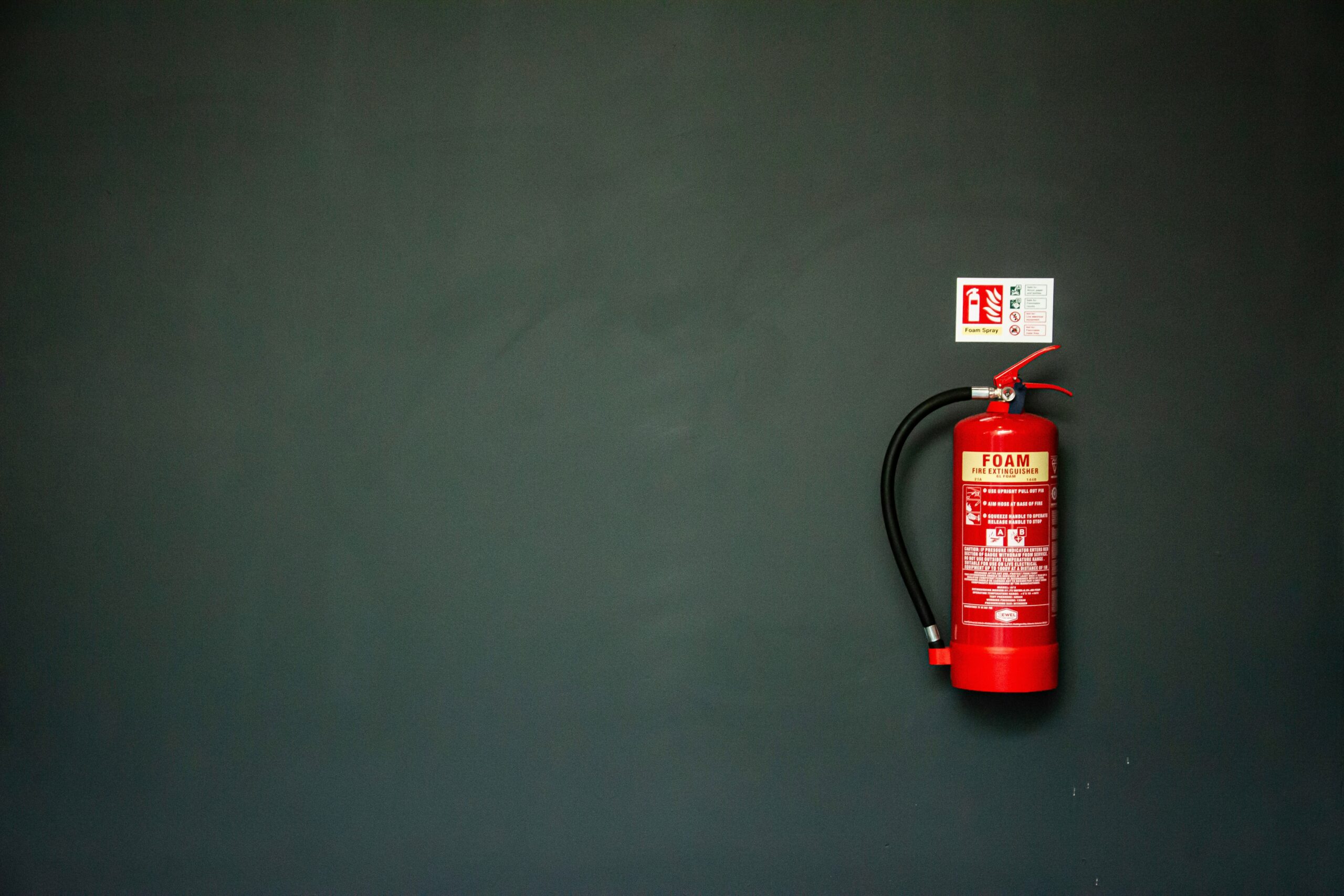
Using the wrong type of extinguisher can be ineffective and, moreover, dangerous. In Australia, fire extinguishers are color-coded for quick identification as a form of first-attack firefighting equipment.
- 🔴 Red (Water): For Class A fires (paper, wood). NEVER use on electrical fires.
- ⚪️ White/Red with White Band (Dry Powder): For Class A, B, and E fires. This is a versatile choice for solids, flammable liquids, and electrical hazards.
- 🔵 Blue (Foam): For Class A and B fires. It is ideal for flammable liquids but not for electrical fires.
- ⚫️ Black (Carbon Dioxide – CO2): Primarily for Class E electrical fires and server rooms, as it leaves no residue.
- 🟡 Yellow (Wet Chemical): Specifically for Class F cooking oil and fat fires.
- 🔩 Metallic Finish (Special Dry Powder): For Class D fires involving combustible metals. This is highly specialized.
Knowing the types is the first step. The second is ensuring staff train to use them correctly using the simple PASS technique: Pull the pin, Aim the nozzle, Squeeze the handle, and Sweep side to side.
Is your team truly prepared for an emergency? Our comprehensive “Follow Emergency Procedures” course covers everything from fire evacuation drills and warden duties to the correct use of fire extinguishers, ensuring your workplace is safe and compliant. [Enroll in the Follow Emergency Procedures Course Today!]
Frequently Asked Questions (FAQ)
Q: Who is responsible for the emergency plan in a workplace?
A: Under WHS law, the “Person Conducting a Business or Undertaking” (PCBU) is ultimately responsible for the emergency management policy. Typically, management creates this policy in consultation with workers.
Q: Do we need a certain number of fire wardens?
A: Yes, AS 3745 recommends a minimum of one warden for every 20 occupants. However, this can vary based on the fire risk and complexity of your workplace.
Q: What about first aid in an emergency?
A: Your emergency plan must include first aid arrangements. This means you need an adequate number of trained first aid officers and appropriately stocked first aid kits that are readily available.
 Further Information Online